Pros and Cons of the Internet
Published: 1 Nov 2026
The internet has become an important part of everyday life. I use it to find information, learn new skills, communicate with others, shop online, and complete daily tasks. It has changed how people study, work, run businesses, and share ideas.
However, the internet also has some disadvantages. Too much screen time, online scams, privacy risks, and false information can create problems. In this article, I will explain pros and cons of the internet, along with practical examples and tips.
Pros of the Internet
Let’s read the advantages of the internet, and then we’ll see how we benefit from it.
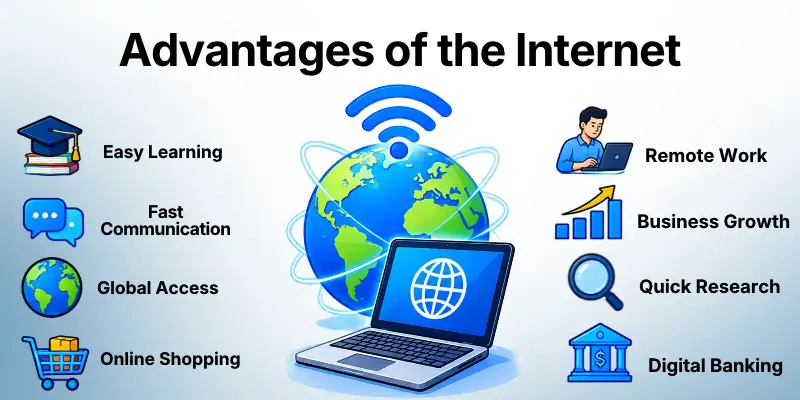
Here is a quick list of the main advantages of the internet.
- Easy Learning
- Fast Communication
- Global Access
- Online Shopping
- Remote Work
- Business Growth
- Quick Research
- Digital Banking
- Online Education
- Entertainment Options
- Social Connections
- Job Opportunities
- Time Savings
- Health Information
- File Sharing
- News Updates
- Skill Development
- Online Marketing
- Public Services
- Creative Sharing
1. Easy Learning
The internet makes learning easier because I can access educational content from almost anywhere. I can find articles, tutorials, videos, and online courses about many subjects.
Students can use these resources to understand difficult topics. Adults can also learn new skills without attending a physical classroom.
Benefits include:
- Access to free learning materials
- Video tutorials for difficult topics
- Self-paced learning options
- Practice exercises and quizzes
- Access to expert knowledge
Practical Tip: I recommend comparing information from reliable sources instead of depending on a single website.
2. Fast Communication
The internet allows people to communicate within seconds. Email, messaging apps, video calls, and social platforms help people stay connected across long distances.
Families can talk to relatives abroad, while businesses can communicate with customers and employees in different locations.
Benefits include:
- Instant text messages
- Affordable international calls
- Easy video meetings
- Quick file sharing
- Better teamwork across locations
Practical Tip: I use the right communication method for each situation. Important matters may need an email or video call rather than a short message.
3. Global Access
The internet connects people, organizations, and communities around the world. It allows users to explore different cultures, access international resources, and learn about events beyond their local areas.
This global connection also helps small businesses reach customers in other countries.
Benefits include:
- Access to international information
- Communication across borders
- Exposure to different cultures
- Opportunities to reach global customers
- Access to worldwide communities
Practical Tip: I check the location, date, and credibility of information before using it for important decisions.
4. Online Shopping
Online shopping allows people to buy products without visiting a physical store. Customers can compare products, read reviews, and place orders from home.
It can save time, especially for people who have limited access to nearby shops. However, buyers still need to check sellers carefully.
Benefits include:
- Convenient shopping from home
- Easy price comparisons
- Access to more products
- Customer reviews
- Home delivery options
Practical Tip: I check seller ratings, return policies, delivery costs, and payment security before placing an order.
5. Remote Work
The internet makes it possible for many people to work from home or another location. Online meetings, cloud tools, and project management platforms help employees and freelancers complete tasks remotely.
Remote work can reduce commuting time and give workers more flexibility. However, it depends on the type of job and the employer’s policies.
Benefits include:
- Less commuting
- Flexible work locations
- Access to international clients
- Online team collaboration
- More work-from-home options
Practical Tip: I set a clear work schedule and create a separate workspace to maintain focus.
6. Business Growth
The internet helps businesses promote products, communicate with customers, and sell goods or services online. Even a small business can create a website or social media page to reach potential buyers.
Businesses can also use online tools to manage orders, collect feedback, and understand customer needs.
Benefits include:
- Wider customer reach
- Lower-cost marketing options
- Online sales opportunities
- Faster customer communication
- Easier product promotion
Practical Tip: I choose online platforms based on my target customers instead of trying to use every platform at once.
7. Quick Research
The internet provides access to a large amount of information. Students, researchers, writers, and professionals can search for facts, reports, studies, and examples.
This can make research faster than relying only on printed materials. However, search results do not guarantee that the information is accurate.
Benefits include:
- Fast access to information
- Research papers and reports
- Multiple viewpoints
- Easy access to reference materials
- Convenient fact-checking
Practical Tip: I verify important claims using original documents, trusted publications, or official sources.
8. Digital Banking
Internet banking allows customers to manage many financial tasks online. Depending on the bank, users may be able to check balances, transfer money, pay bills, and review transactions.
These services can reduce the need to visit a bank branch. Security remains important because financial accounts can attract online criminals.
Benefits include:
- Convenient account access
- Online bill payments
- Faster transfers
- Digital transaction records
- Less need for branch visits
Practical Tip: I use official banking apps or websites, enable available security features, and never share passwords or one-time codes.
9. Online Education
Online education allows students to attend classes, access study materials, and complete assignments through the internet. It helps people learn from home and may offer more flexibility than traditional classroom learning.
Some courses also provide recorded lessons that students can review when needed.
Benefits include:
- Flexible study schedules
- Access to online courses
- Recorded lessons
- Learning from different locations
- Opportunities for adult learners
Practical Tip: I create a study timetable and check that the course provider is credible before paying for a course.
10. Entertainment Options
The internet offers many forms of entertainment, including movies, music, games, podcasts, and online videos. People can choose content based on their interests and preferences.
However, endless entertainment can also consume time that people need for sleep, work, study, or exercise.
Benefits include:
- Access to music and videos
- Online gaming
- Movies and streaming services
- Podcasts and digital books
- Content for different interests
Practical Tip: I set limits on entertainment time so it does not interfere with my daily responsibilities.
11. Social Connections
Social media and online communities help people maintain relationships and meet others with similar interests. People can share updates, discuss hobbies, and participate in group activities.
These platforms can help people feel connected, but online interactions do not always replace meaningful face-to-face relationships.
Benefits include:
- Staying in touch with friends
- Connecting with relatives
- Finding interest-based communities
- Sharing photos and updates
- Meeting people with similar goals
Practical Tip: I protect my personal information and avoid sharing private details with people I do not know well.
12. Job Opportunities
The internet makes it easier to search for jobs, prepare applications, and connect with employers. Many websites list vacancies across different industries and locations.
Freelancers can also find clients through online platforms. However, some job advertisements are fraudulent, so applicants need to be cautious.
Benefits include:
- Access to job listings
- Online application processes
- Professional networking
- Freelance opportunities
- Access to career resources
Practical Tip: I research employers and avoid job offers that require suspicious upfront payments or sensitive personal information.
13. Time Savings
The internet can save time by making everyday tasks easier to complete. People can book appointments, pay bills, submit forms, and compare services online.
These conveniences can reduce travel and waiting time. The actual time saved depends on the task and the quality of the service.
Benefits include:
- Online appointments
- Digital payments
- Faster information searches
- Electronic document submission
- Convenient service access
Practical Tip: I use trusted digital services for repetitive tasks but review important details before submitting anything.
14. Health Information
The internet provides health articles, educational videos, and information from hospitals and public health organizations. People can use these resources to learn about symptoms, healthy habits, and medical services.
However, online information cannot always identify the cause of a health problem. Incorrect advice can lead to poor decisions.
Benefits include:
- Access to health education
- Information about healthy habits
- Hospital and clinic websites
- Appointment booking options
- Preparation for medical visits
Practical Tip: I prefer official health organizations and qualified medical professionals for important health decisions.
15. File Sharing
The internet allows people to send documents, images, videos, and other digital files. Cloud storage services can also help teams work on shared documents from different locations.
This is useful for education, business, and personal projects. Users should still consider file permissions and privacy.
Benefits include:
- Quick document sharing
- Easier teamwork
- Cloud storage options
- Access across devices
- Convenient project collaboration
Practical Tip: I check sharing permissions before sending a file, especially if it contains private or confidential information.
16. News Updates
The internet gives people access to news from local and international sources. News websites and official accounts can publish updates quickly during important events.
However, speed does not always mean accuracy. Rumors and misleading headlines can spread before facts are confirmed.
Benefits include:
- Quick access to breaking news
- Coverage from different sources
- Local and global updates
- Access to official announcements
- Convenient news alerts
Practical Tip: I compare important news with multiple reputable sources and check when the report was published.
17. Skill Development
People can use the internet to develop practical and professional skills. Tutorials, courses, online communities, and practice tools support learning in areas such as writing, design, programming, and marketing.
Learning online can be affordable, but progress still requires regular practice.
Benefits include:
- Tutorials for practical skills
- Access to online courses
- Opportunities to practice
- Learning new software
- Professional development resources
Practical Tip: I choose one skill, follow a structured learning plan, and complete small projects to measure progress.
18. Online Marketing
The internet helps businesses promote products and services through websites, email, search engines, and social media. Online marketing can help businesses reach specific audiences and measure campaign performance.
Results depend on the quality of the offer, the audience, the budget, and the marketing strategy.
Benefits include:
- Targeted advertising options
- Website traffic opportunities
- Direct customer communication
- Measurable campaign results
- Content promotion
Practical Tip: I define a clear marketing goal and track meaningful results before increasing spending.
19. Public Services
Many governments and public organizations offer information and services online. Depending on the location, people may be able to access forms, check requirements, pay fees, or make appointments.
Online services can reduce unnecessary visits to offices, although some processes still require in-person steps.
Benefits include:
- Access to official information
- Online forms and applications
- Convenient appointment booking
- Digital payment options
- Updates about public services
Practical Tip: I use official government websites and check the web address before submitting personal documents.
20. Creative Sharing
The internet gives people ways to share their creative work with a wider audience. Writers, artists, photographers, musicians, and video creators can publish content and receive feedback.
Some creators may also earn money from their work, but income is not guaranteed.
Benefits include:
- Sharing original content
- Reaching new audiences
- Receiving useful feedback
- Building a creative portfolio
- Exploring possible income sources
Practical Tip: I respect copyright rules, credit other creators when required, and protect my original work.
Cons of the Internet:
As we have read advantages, we also read disadvantages of the internet to compare the advantages.
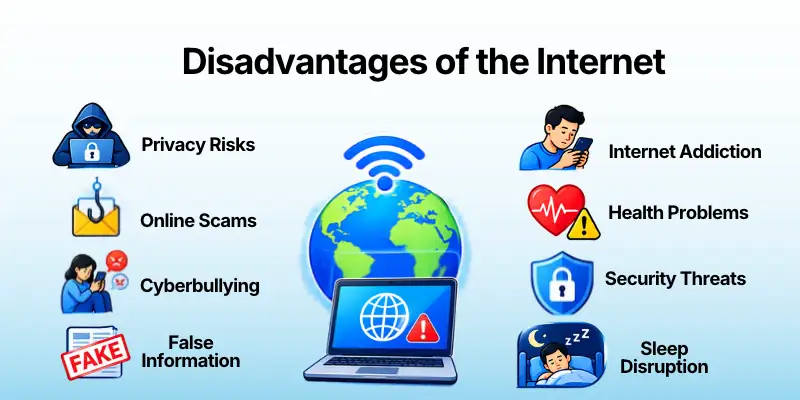
Here is a quick list of the main disadvantages of the internet.
- Privacy Risks
- Online Scams
- Cyberbullying
- False Information
- Internet Addiction
- Health Problems
- Security Threats
- Sleep Disruption
- Social Isolation
- Data Theft
- Online Harassment
- Reduced Focus
- Harmful Content
- Financial Losses
- Digital Divide
- Work Distractions
- Child Safety
- Relationship Problems
- Environmental Costs
- Technical Issues
Detailed Explanation of the Cons
1. Privacy Risks
The internet can expose personal information when people share too much online or use services without checking their privacy settings. Websites and apps may collect information about users, depending on their policies and permissions.
Once private information becomes public, removing every copy can be difficult.
Common risks include:
- Oversharing personal details
- Public social media profiles
- Unclear app permissions
- Location information exposure
- Unwanted data collection
Practical Tip: I review privacy settings and share personal information only when necessary.
2. Online Scams
Online scams trick people into sending money, revealing information, or clicking unsafe links. Scammers may pretend to be banks, employers, sellers, or trusted organizations.
These scams can appear in emails, text messages, social media posts, and online marketplaces.
Common risks include:
- Fake shopping websites
- Fraudulent job offers
- Phishing messages
- Fake investment opportunities
- Impersonation scams
Practical Tip: I verify the sender and website independently before sending money or sharing account information.
3. Cyberbullying
Cyberbullying involves using digital platforms to threaten, embarrass, or repeatedly target another person. It can happen through messages, social media, online games, or public posts.
Hurtful content can spread quickly and may be difficult to remove completely.
Common risks include:
- Abusive messages
- Public humiliation
- Threatening comments
- Sharing private content
- Repeated online targeting
Practical Tip: I save evidence, block the person when appropriate, report abusive behavior, and seek support from someone I trust.
4. False Information
The internet allows people to publish information quickly, but not everything online is accurate. False claims can spread through social media, edited images, misleading videos, and unreliable websites.
Believing incorrect information can affect decisions about money, health, education, and public events.
Common risks include:
- Misleading headlines
- Fake news stories
- Fabricated statistics
- Outdated information
- Unverified health advice
Practical Tip: I check the original source, publication date, supporting evidence, and other reliable reports before trusting a claim.
5. Internet Addiction
Some people spend so much time online that it interferes with their responsibilities and relationships. Repeatedly checking social media, gaming, or browsing can make it harder to control screen time.
Heavy use is not automatically an addiction, but losing control over online activities can become a serious concern.
Common problems include:
- Neglecting daily tasks
- Spending excessive time online
- Difficulty stopping
- Reduced study or work time
- Less time for offline activities
Practical Tip: I set clear screen-time limits and keep phones away during important tasks.
6. Health Problems
Long periods online can contribute to physical discomfort, especially when people sit still or use screens without breaks. Some users may experience eye strain, neck pain, or reduced physical activity.
The effects depend on how people use their devices and how often they take breaks.
Common problems include:
- Eye discomfort
- Neck and shoulder strain
- Long periods of sitting
- Reduced physical activity
- Mental fatigue
Practical Tip: I take regular breaks, adjust my screen position, and include movement in my daily routine.
7. Security Threats
Online devices and accounts can face threats such as malicious software, hacked passwords, and unauthorized access. Weak security practices can make it easier for attackers to compromise personal or business information.
No single security measure prevents every threat, but basic precautions reduce risk.
Common risks include:
- Malware infections
- Stolen passwords
- Hacked accounts
- Unsafe downloads
- Unauthorized access
Practical Tip: I use unique passwords, enable multifactor authentication where available, and keep my devices updated.
8. Sleep Disruption
Using the internet late at night can delay bedtime and reduce sleep time. Notifications, videos, games, and endless scrolling may make it difficult to stop using a device.
Poor sleep can affect concentration, mood, and daily performance.
Common problems include:
- Delayed bedtime
- Late-night browsing
- Frequent notifications
- Reduced sleep duration
- Tiredness the next day
Practical Tip: I set a regular bedtime and stop using stimulating apps before sleep.
9. Social Isolation
Although the internet helps people connect, excessive online activity can reduce time spent with family and friends in person. Some people may also compare their lives with carefully edited content on social media.
Online communication can be valuable, but it should not completely replace real-world relationships.
Common problems include:
- Less face-to-face interaction
- Reduced family time
- Excessive social comparison
- Fewer shared activities
- Feeling disconnected
Practical Tip: I make time for in-person conversations and activities without screens.
10. Data Theft
Data theft occurs when someone gains access to information and uses it without permission. Criminals may target financial details, account credentials, identity information, or business records.
Stolen information can be used for fraud or sold to others.
Common risks include:
- Stolen login details
- Identity misuse
- Financial information exposure
- Compromised business files
- Unauthorized account access
Practical Tip: I avoid entering sensitive information on suspicious websites and monitor important accounts for unusual activity.
11. Online Harassment
Online harassment includes unwanted, abusive, threatening, or repeated contact through digital platforms. It can affect people in personal, educational, and professional settings.
Harassment may continue across multiple accounts or platforms, making it stressful to manage.
Common problems include:
- Threatening messages
- Repeated unwanted contact
- Abusive comments
- Impersonation
- Sharing private information without permission
Practical Tip: I use platform reporting tools, keep records of serious incidents, and seek help when threats or safety concerns arise.
12. Reduced Focus
The internet offers constant notifications, messages, videos, and updates. Switching between these activities can interrupt concentration and make complex tasks take longer.
Some online tools support productivity, but uncontrolled browsing can create unnecessary distractions.
Common problems include:
- Frequent interruptions
- Constant app checking
- Delayed assignments
- Multitasking difficulties
- Incomplete tasks
Practical Tip: I turn off nonessential notifications and work on one important task at a time.
13. Harmful Content
Some websites and platforms contain violent, disturbing, misleading, or age-inappropriate material. Children and teenagers may encounter content they are not prepared to understand.
Content filters can help, but they do not catch everything.
Common risks include:
- Age-inappropriate material
- Graphic images
- Dangerous challenges
- Harmful advice
- Exposure to disturbing content
Practical Tip: I use suitable content settings and talk openly with children about safe internet use.
14. Financial Losses
Internet users may lose money through scams, unsafe purchases, fake investment schemes, or unauthorized transactions. Even legitimate online services can involve recurring charges that people overlook.
Careful checking can help reduce these risks.
Common risks include:
- Fake online stores
- Hidden subscription renewals
- Fraudulent payment requests
- Counterfeit products
- Misleading investment promises
Practical Tip: I review prices and subscription terms, use trusted payment methods, and check account statements regularly.
15. Digital Divide
Not everyone has reliable internet access, suitable devices, or the skills needed to use online services. This gap can affect education, employment, communication, and access to information.
People in rural areas or low-income households may face additional barriers.
Common problems include:
- Limited internet coverage
- High connection costs
- Lack of suitable devices
- Low digital skills
- Fewer online opportunities
Practical Tip: I support accessible learning resources and community programs that help people build digital skills.
16. Work Distractions
Internet access can make work easier, but it can also encourage unrelated browsing during working hours. Social media, entertainment websites, and personal messages may interrupt important tasks.
Frequent distractions can reduce productivity and delay deadlines.
Common problems include:
- Unplanned browsing
- Social media breaks that run long
- Missed deadlines
- Frequent task switching
- Reduced work quality
Practical Tip: I separate work and personal browsing and schedule short breaks instead of checking websites constantly.
17. Child Safety
Children may face online risks such as inappropriate contact, privacy exposure, scams, or unsuitable content. They may not always recognize manipulation or understand the consequences of sharing information.
A combination of guidance, privacy settings, and age-appropriate boundaries can improve safety.
Common risks include:
- Contact from strangers
- Sharing personal details
- Inappropriate content
- Online manipulation
- Unsafe downloads or links
Practical Tip: I teach children not to share private information and encourage them to tell a trusted adult if something online makes them uncomfortable.
18. Relationship Problems
Internet use can cause tension when people ignore conversations, misunderstand messages, or spend too much time on devices. Social media can also create conflict through jealousy, public arguments, or unclear boundaries.
The internet itself does not damage every relationship, but the way people use it matters.
Common problems include:
- Less quality time
- Misunderstood messages
- Online jealousy
- Public relationship conflicts
- Reduced attention during conversations
Practical Tip: I agree on device-free times and discuss online boundaries openly with the people close to me.
19. Environmental Costs
The internet depends on devices, networks, data centers, and other infrastructure that require energy and materials. Manufacturing and replacing electronic devices also creates environmental impacts.
Digital services may reduce some activities, such as certain trips or paper use, but they are not impact-free.
Common concerns include:
- Electricity use
- Electronic waste
- Device manufacturing impacts
- Resource consumption
- Frequent device replacement
Practical Tip: I keep devices for as long as practical, repair them when possible, and recycle electronics through suitable programs.
20. Technical Issues
Internet services can stop working because of network outages, equipment failures, software problems, or weak connections. These issues can interrupt meetings, online classes, payments, and other important activities.
The impact may be greater when someone depends entirely on digital services.
Common problems include:
- Slow connection speeds
- Network outages
- Website errors
- Failed downloads
- Interrupted online meetings
Practical Tip: I keep important files available offline and have a backup option for essential tasks when possible.
Common Uses of the Internet
People use the internet for many purposes in daily life. The most common uses include:
- Education: Online classes, research, tutorials, and study materials.
- Communication: Emails, messages, video calls, and social networking.
- Business: Online sales, marketing, customer support, and remote work.
- Entertainment: Music, movies, games, podcasts, and digital books.
- Shopping: Product research, price comparisons, and online purchases.
- Banking: Account management, bill payments, and money transfers.
- News: Local updates, international reports, and official announcements.
- Public services: Online applications, forms, and appointment booking.
Factors to Consider Before Using the Internet
I consider these factors when deciding how to use the internet safely and effectively.
- Purpose: Know what you need to accomplish before going online.
- Security: Protect your accounts, devices, and personal information.
- Reliability: Check whether information comes from a trustworthy source.
- Time: Avoid letting online activities interfere with work, sleep, or family.
- Cost: Review internet packages, subscriptions, and other charges.
- Privacy: Think carefully before sharing personal details or photos.
- Age Suitability: Choose content and services that fit the user’s age.
- Balance: Make time for offline activities and personal relationships.
Common Mistakes to Avoid
These mistakes can make internet use less safe or less productive.
- Clicking unknown links without checking them.
- Using the same password for multiple accounts.
- Believing every social media post.
- Sharing private information publicly.
- Spending hours online without a clear purpose.
- Downloading files from untrusted websites.
- Ignoring app permissions and privacy settings.
- Buying products without checking the seller.
- Using screens late at night without limits.
- Leaving accounts open on shared devices.
How to Use the Internet More Effectively
I can get more value from the internet by following a few simple habits.
- Set Clear Goals: Decide what you want to learn or complete.
- Choose Reliable Sources: Prefer official websites and trusted publications.
- Protect Accounts: Use strong, unique passwords and available security features.
- Manage Screen Time: Schedule breaks and limit unnecessary browsing.
- Organize Information: Save useful links and keep files in clear folders.
- Check Privacy: Review account visibility and app permissions.
- Verify Purchases: Research sellers and read the terms before paying.
- Maintain Balance: Make time for exercise, sleep, work, and face-to-face interaction.
Internet vs. Traditional Methods
| Activity | Using the Internet | Traditional Method |
| Learning | Online courses and digital resources | Classroom lessons and printed books |
| Communication | Email, messaging, video calls | Letters and in-person meetings |
| Shopping | Online stores and home delivery | Visiting physical shops |
| Banking | Online transfers and bill payments | Branch visits and paper forms |
| Research | Search engines and digital libraries | Printed books and physical libraries |
Neither approach is always better. The right choice depends on accessibility, cost, personal preference, and the task.
Quick Summary: Pros and Cons of the Internet
| Pros | Cons |
| Easy learning | Privacy risks |
| Fast communication | Online scams |
| Global access | Cyberbullying |
| Online shopping | False information |
| Remote work | Internet addiction |
| Business growth | Health problems |
| Quick research | Security threats |
| Digital banking | Sleep disruption |
| Job opportunities | Social isolation |
| Creative sharing | Data theft |
Frequently Asked Questions
Now, let’s explore some frequently asked questions
1. What are the main pros of the internet?
The main advantages include fast communication, easy access to information, online education, remote work, digital banking, online shopping, and business opportunities.
2. What are the main cons of the internet?
The main disadvantages include privacy risks, online scams, false information, cyberbullying, security threats, excessive screen time, and possible sleep disruption.
3. Is the internet good or bad?
The internet can be useful or harmful depending on how people use it. Safe and balanced use can provide many benefits, while careless use can create risks.
4. How does the internet help students?
Students can access online courses, educational videos, digital libraries, practice exercises, and research materials. They still need to verify information and avoid distractions.
5. How does the internet help businesses?
Businesses can reach customers, promote products, sell online, communicate with clients, and collaborate with employees in different locations.
6. Can the internet affect mental health?
Excessive or harmful online experiences may affect mood, sleep, and well-being for some people. The effects vary by individual and the type of online activity.
7. How can I stay safe online?
I recommend using strong passwords, enabling multifactor authentication, checking links, updating devices, limiting personal information sharing, and verifying websites before making payments.
8. Does the internet waste time?
It can waste time when people browse without a clear purpose or spend too long on entertainment and social media. Planning online activities can help people stay focused.
9. Why is internet access important?
Internet access supports communication, education, work, information sharing, and many digital services. However, reliable access and digital skills are not available equally to everyone.
10. How can I balance internet use with daily life?
Set limits for entertainment, take regular breaks, protect your sleep schedule, turn off unnecessary notifications, and make time for exercise and in-person relationships.
Final Thoughts
The internet has changed how people learn, work, communicate, shop, and access information. It offers many advantages, from global communication to new educational and business opportunities.
However, it also brings challenges such as online scams, privacy risks, misinformation, and excessive screen time. I believe the best approach is to use the internet with a clear purpose, protect personal information, and maintain a healthy balance between online and offline life.
When I use it responsibly, the internet can be a valuable tool for everyday life.




- Be Respectful
- Stay Relevant
- Stay Positive
- True Feedback
- Encourage Discussion
- Avoid Spamming
- No Fake News
- Don't Copy-Paste
- No Personal Attacks
- Be Respectful
- Stay Relevant
- Stay Positive
- True Feedback
- Encourage Discussion
- Avoid Spamming
- No Fake News
- Don't Copy-Paste
- No Personal Attacks
